
· Simon Galperin
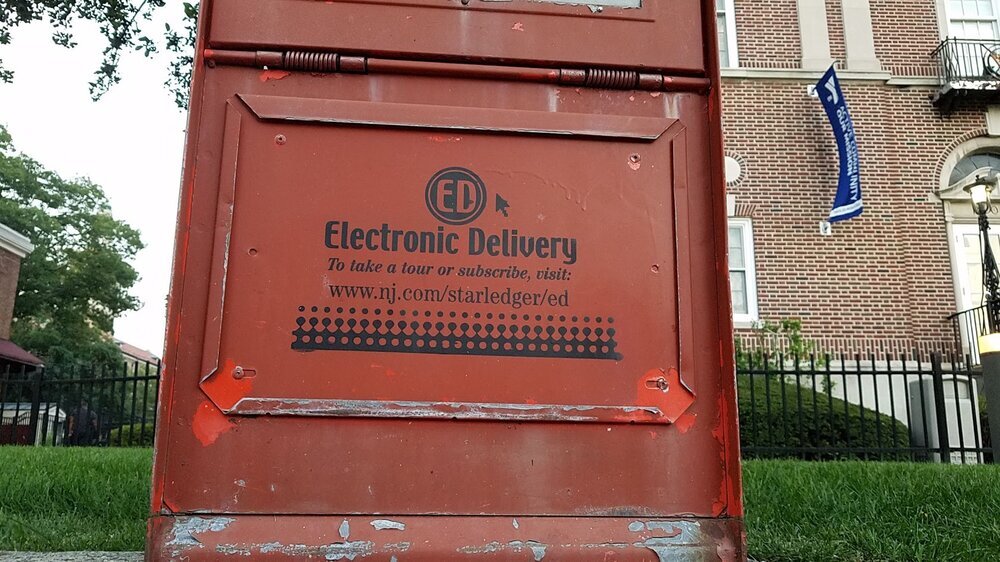
An unused newspaper box advertises electronic delivery of New Jersey’s Star Ledger newspaper.
In 2019, with support from Pro Bono Partnership, we commissioned Dechert LLP to conduct an analysis of New Jersey’s special district laws to understand how they might be used to establish info districts.
Info districts are a proposed type of special taxing district – defined by geographic boundaries and overseen by a public board – that funds local news and information projects to facilitate civic engagement.
The Community Info Coop’s Info Districts Project seeks to establish a national network of these new, publicly funded local news organizations.
An info district is organized by engaging a community in outlining their information needs and designing solutions to them. This process informs the charter of the district and determines how it will serve its constituents. Established by referendum, the district should be reauthorized by the public every few years to ensure it maintains its mission-alignment.
This local public funding model is purpose-built to address the needs of hundreds of communities across the U.S. suffering (opens in a new window) from a lack of quality local news and information. (You can download our guide to launching info districts here (opens in a new window).)
New Jersey is uniquely suited to be the first in the nation to pilot an info district. In 2018, it established (opens in a new window) the country’s first state fund for local news and information projects. Keystone organizations like the Center for Cooperative Media (opens in a new window) and Sustainable Jersey (opens in a new window) support local news providers and governments, respectively, to help them keep the public informed and engaged. And there are multitudes of local journalists in the state with the capacity to serve their communities if they can receive the financial support to do so.
The analysis finds that New Jersey’s special district law was not intended to establish info districts, as we expected. The law was written to allow local governments to promote economic welfare. But evidence shows that local journalism can have a positive impact on government borrowing costs (opens in a new window), increase civic participation (opens in a new window), and improve public health outcomes (opens in a new window). So, as the analysis notes, evidence of positive economic impact would be crucial to establishing an info district in the state.
The analysis also suggests the possibility of pairing info district activities with the typical activities of a special district in New Jersey – things like business directories, local online marketplaces, or physical improvements.
Info districts can reform and revitalize local journalism across the U.S. and create new, participatory public institutions that will serve communities for decades to come. New Jersey can lead that change. We hope it does.
Download our analysis of New Jersey’s special improvement district here.